
Getting Kinetic

NO. 05 · SEPTEMBER 2, 2026
|
|
Hi— When I was a kid, my dad paid for his cedar posts at the desk inside Reed’s Hardware, then drove around back to the yard with the pick ticket. He hopped out before anybody could load him up, sighting down each post, looking for the truest boards and setting aside the ones he didn’t want. The guys' job was to pull twenty-six off the stack and get them in this man’s truck. They had a couple dozen more orders to fill before lunch, and to them a post is a post is a post. To my dad, each board was a choice that reflected his values—it had to be true. “Fine,” I heard them laughing, “he can load himself.” |
|
A TENSION
Every industry sells the way it’s convenient to sell.
Dealers and customers don’t always value the same things. Dealers buy units, break them down and mark them up—in other words, they sell a category. Consumers, on the other hand, have something specific in mind for how they plan to use the product. Look at what’s really happening there. Dealers are not removing choice—they’re commoditizing it by keeping the choice that’s easy for them and taking away the one the customer came for. With lumber, dimensions are the commodity, but the end result is what the end user is after. Once you see it in lumber you see it everywhere, including in software. Plans, tiers, bundles, defaults—when we’re not careful, a lot of what we put in front of people is shaped by how the thing gets made and sold, not by what they showed up to do. |
|
FROM THE WORK
Do the part nobody else is willing to do.
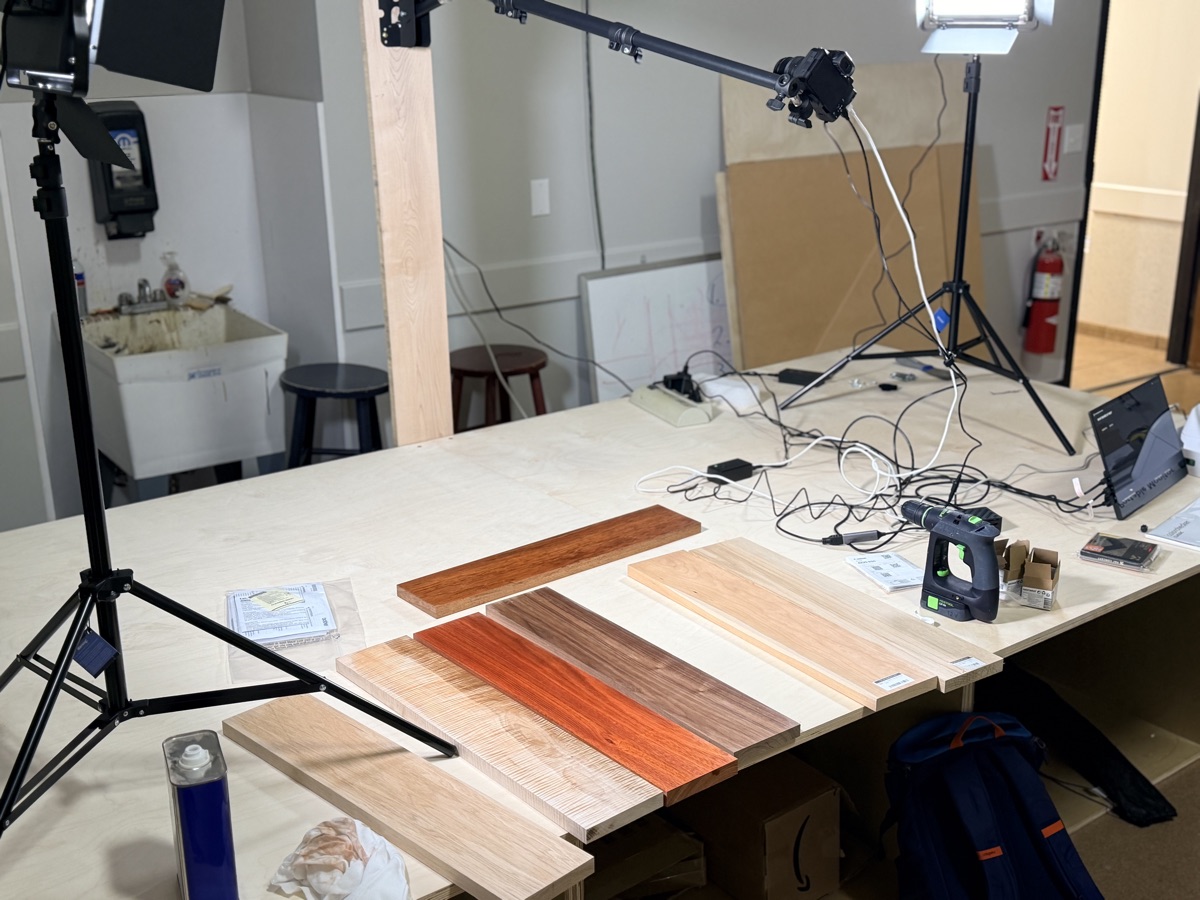 Setting up the photo booth that makes it possible to photograph each board individually. Pretty stuff, alongside some cool tech.
We’re building an eCommerce experience with a hardwood dealer right now that flips this. Every board is milled into a handful of project-ready dimensions, then gets photographed in an automated kiosk we designed and built to push the products to Shopify. The shopping experience pushes back on the way the industry wants to process and sell wood. It does take some choice away, but it also removes complexity—rough versus surfaced, random widths and lengths, the maximum flexibility that comes with the vocabulary that makes a beginner feel stupid for asking. We helped them take decisions off the table so the only one left is the one the human came for: “which boards do I like?” The photos aren’t the hard part. The lumber processing to make this possible is. (The reason nobody does it is that it’s hard.) And guess what: that’s the moat. Not the idea and not the execution, because both are cheap now (with AI, yeah-yeah). It comes down to the courage and willingness to do the hard thing that only makes sense because you truly understand the customer and are selling what they want to buy the way they want to buy it. |
|
PUT IT TO WORK
Which choices are you offering because they’re convenient for you, and which one did your customer actually come for?
|
|
Today’s note came out of a chat I had with a prospect yesterday who asked, “How does an agency, and honestly how does anyone in this industry, stay relevant, what with AI and all?” I don’t think I’m all the way to the bottom of this one yet. Hit reply and tell me what you think. — JD and the Simple Focus gang |
|
Want notes like this in your inbox? Subscribe. It's occasional, and you can reply.
|